
How to Prepare Your RV for Storage Between Adventures
Plan for batteries, plumbing, tires, roof seals and South Florida humidity before your RV sits unused.
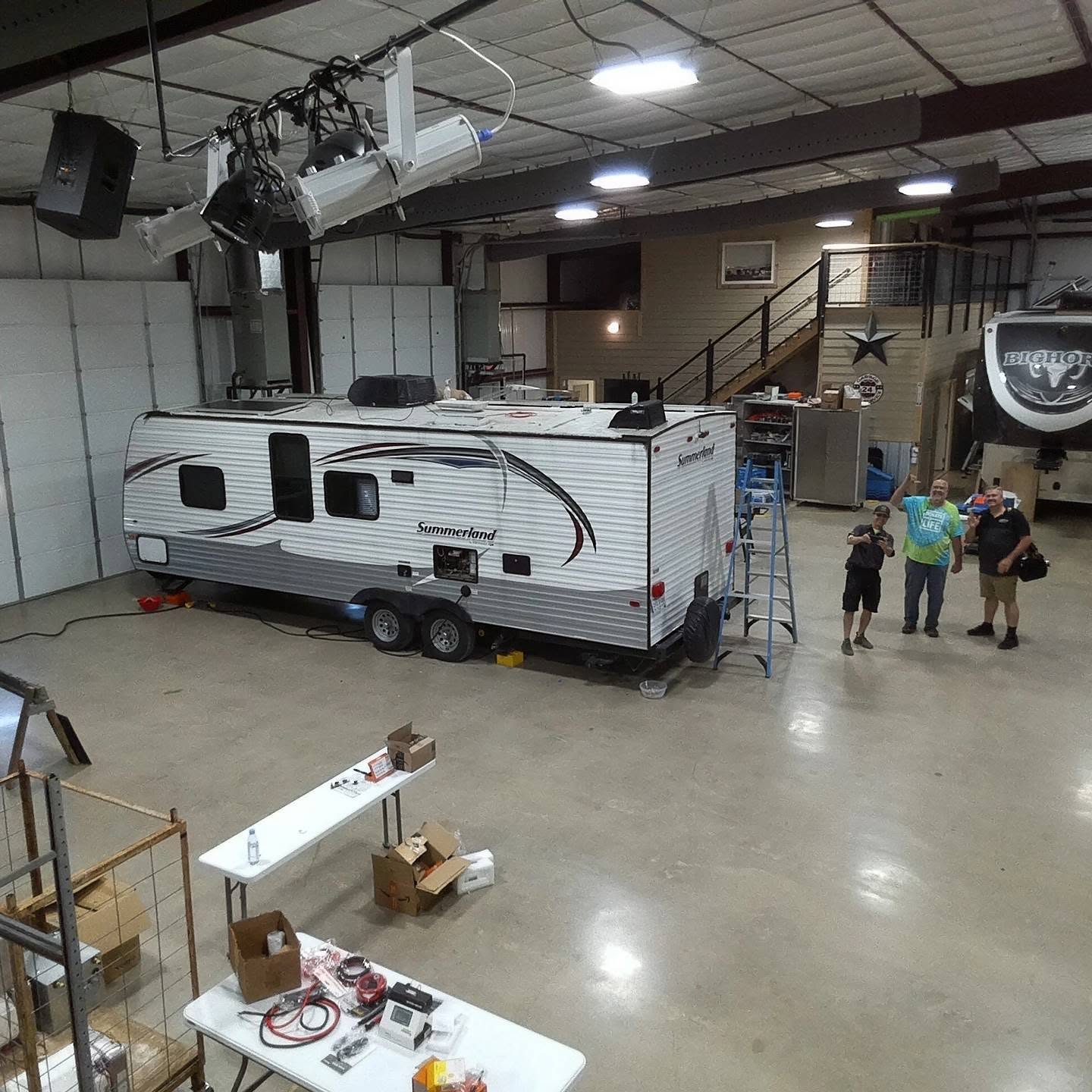
On-site RV service and repair, performed where your RV is parked — no towing, no dealership queue.
BBMotorhomes is a fully mobile RV service operation based in Miami, Florida. Instead of asking you to move a motorhome or travel trailer to a shop and wait weeks for a bay, we bring the tools, diagnostic equipment, and parts to your location. That means your driveway, your storage lot, your campground site, or the roadside stop where the problem showed up.
The work is carried out by a certified technician who is licensed and insured to operate in Florida. Before anything is touched, we talk through what you are seeing, what the RV has done recently, and what outcome you need — whether that is a permanent repair, a safe temporary fix to finish a trip, or a documented assessment you can hand to an insurer or a warranty administrator.
Common calls include electrical and 12V system faults, converter and inverter issues, generator troubleshooting, plumbing and water system leaks, water heater and refrigerator service, roof and sealant work, slide-out adjustment, awning repair, LP system checks, and general appliance service. If a job genuinely requires a facility we do not have, we will tell you that plainly rather than sell you hours.
Scheduling is straightforward: describe the issue and where the RV is located, and we confirm a window. For owners who travel between Brazil and Florida, or who keep an RV in storage between seasons, we can coordinate service while you are away and report back with photos and written notes.
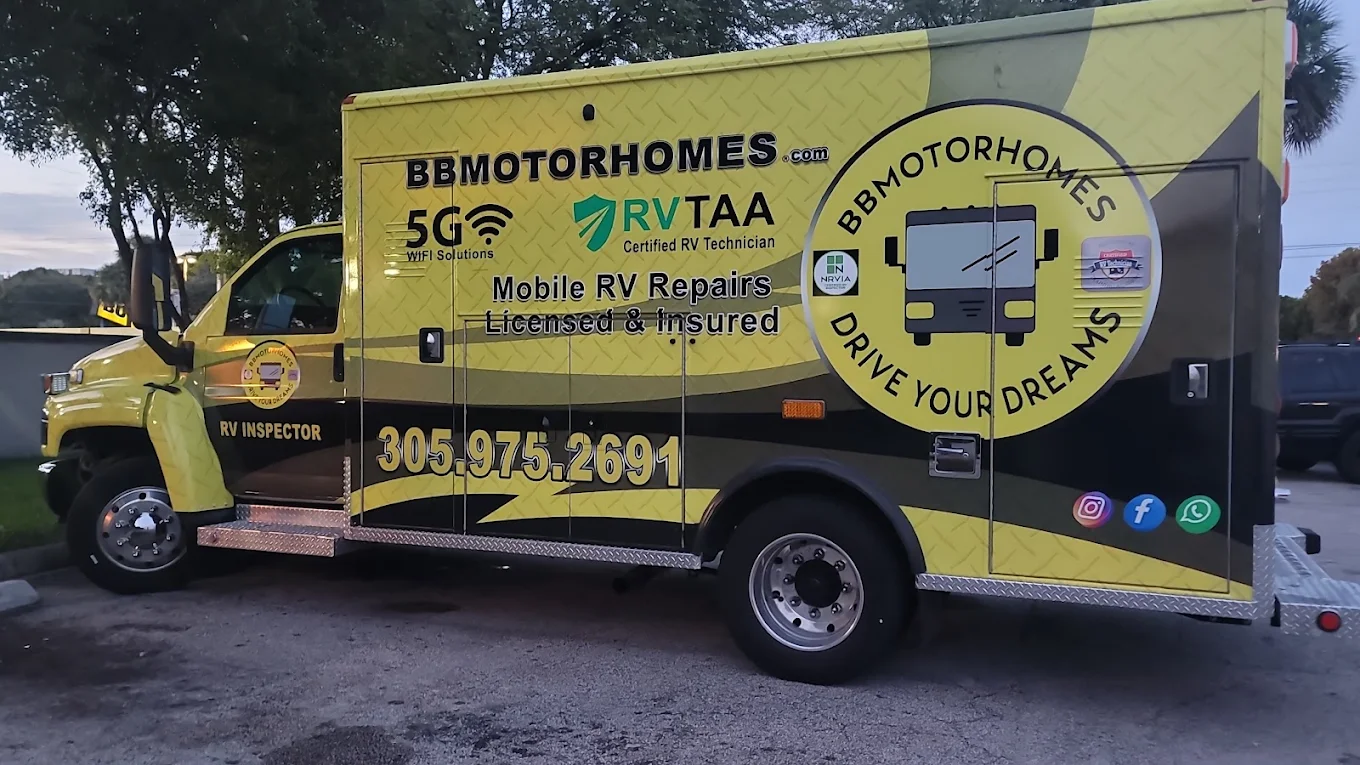
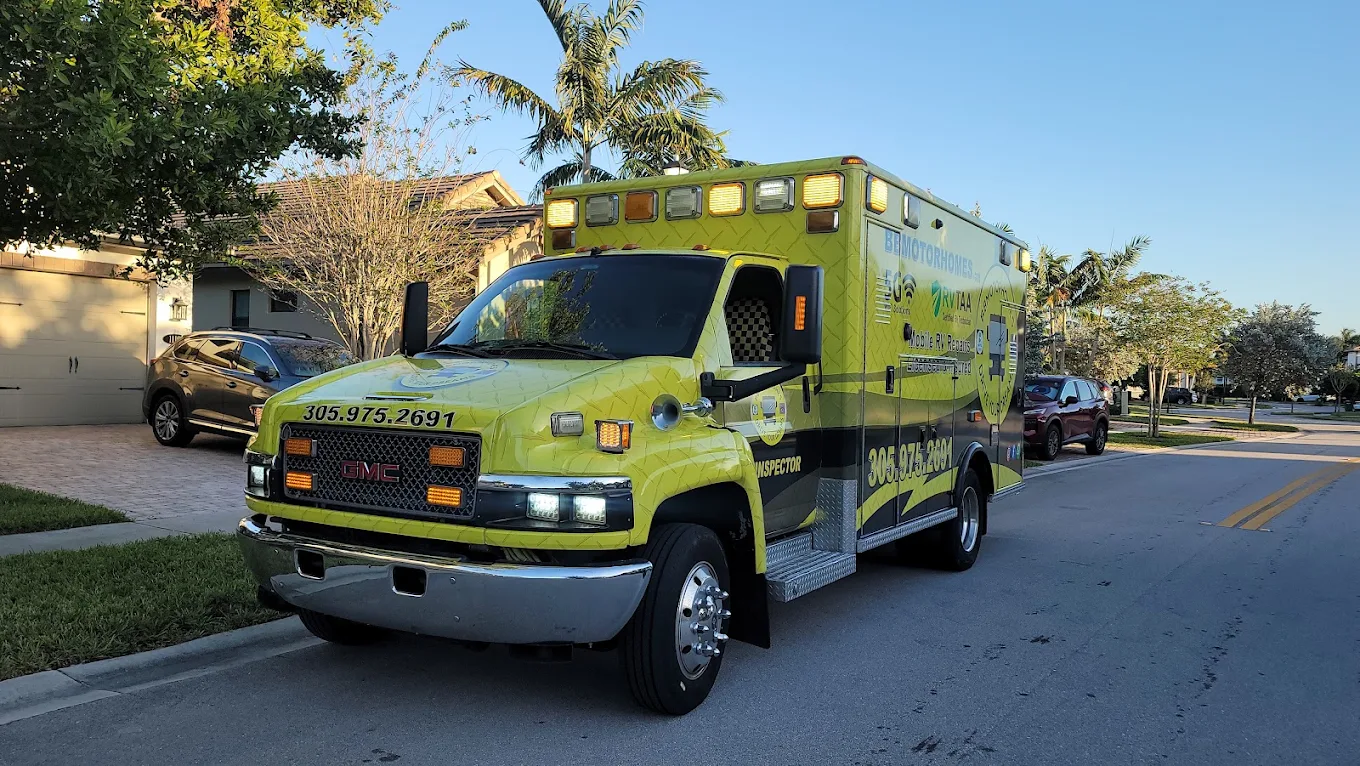
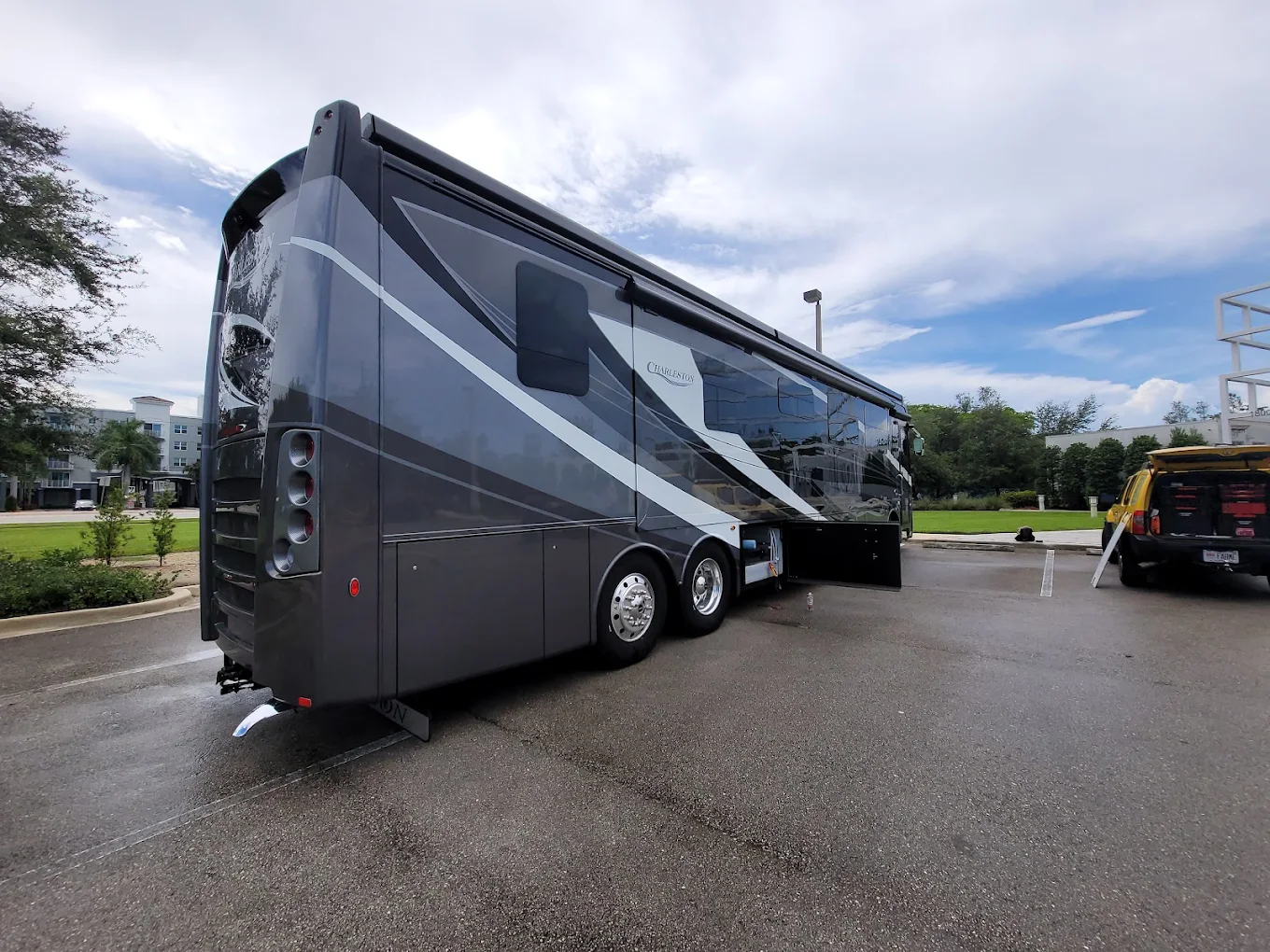
AC trouble, charging issues, water leaks and a no-start condition need different approaches. Explore the symptoms, maintenance considerations and information to have ready when you call.
Weak cooling, unexpected shutdowns or unusual noise deserve a system check—not a guess at which part to replace.
An RV air conditioner depends on more than the rooftop unit. The electrical supply, thermostat, airflow and the installation all affect operation. If the fan runs but cooling is weak, or a unit stops when another appliance starts, explain those conditions when requesting service. BBMotorhomes can discuss AC diagnostics and maintenance at your driveway, storage location or campground in South Florida, subject to safe access and the requirements of your particular equipment.
A useful evaluation begins with the unit’s make and model, how many air conditioners the RV has and whether the problem affects one or all of them. Tell us whether you are connected to shore power or using a generator, and note any thermostat message. Airflow restrictions, dirty filters, control faults and electrical problems can produce similar symptoms. A diagnosis helps determine whether cleaning, an electrical or control repair, or discussion of a replacement unit is the appropriate next step.
Routine maintenance should follow the AC manufacturer’s instructions. Accessible filters, return-air openings, rooftop condition and drainage arrangements may need attention, but equipment designs differ. Water appearing around an AC opening also warrants investigating the installation and surrounding roof rather than assuming it is only condensation. Do not climb onto an RV roof without appropriate safe access, bypass electrical protection or attempt refrigerant work yourself. If you notice a burning smell or damaged wiring, stop using the affected equipment and seek qualified help.
A useful solar installation is designed around your power use, battery bank and RV—not just the number of panels on the roof.
For an RV solar panel installation, start with what you want the system to support. Charging a battery bank during storage, extending time away from hookups and supplying larger inverter loads are different goals. Discuss the appliances you use, how long you use them and your existing batteries, converter and inverter. Panel output alone does not establish how much usable power you will have, and solar panels do not automatically make every appliance suitable for off-grid operation.
Installation planning considers available mounting space, roof construction, cable routing, protection devices, charge-controller compatibility and battery requirements. Any roof penetrations need appropriate weather sealing, and equipment must be installed according to the relevant manufacturer guidance. If you are adding panels to an existing system, provide the panel, controller and battery information you already have. BBMotorhomes can discuss the installation or upgrade scope for your RV rather than recommending a one-size-fits-all package or promising a particular daily energy yield.
Solar maintenance can involve reviewing panel condition, visible mounts and wiring, controller readings and the condition of seals around installation points. Reduced charging can be related to shade, surface contamination, wiring, controller settings or the battery bank; it does not necessarily mean the panels have failed. Follow the panel manufacturer’s cleaning instructions and do not disconnect live solar wiring to investigate a fault. Tell us about recent changes, warning messages and whether the charging issue is new or has been present since installation.
Tank and tankless systems need model-specific evaluation of water supply, controls and the available energy source.
An RV water heater may use propane, electricity or a combination of energy sources, and tankless designs have their own operating requirements. When calling about no hot water, identify the type and model if possible. Describe whether the problem began after storage, a plumbing change or arrival at a different campsite. Water supply, control power, an equipment fault or an incorrect operating arrangement can each affect performance; the symptom needs evaluation before a component is replaced.
Water-heater repair and water-system diagnostics can address failure to start, intermittent heating, visible leaks and related plumbing concerns. Explain whether cold-water flow is normal and whether the issue affects every fixture or just one. If an electric/propane unit works in one mode but not the other, that distinction is useful. Keep any displayed error information available for the technician, and mention recent maintenance, winterization or changes to bypass valves without attempting unfamiliar adjustments yourself.
Manufacturer-specific maintenance may include tank care, inspection of applicable components and checks of the surrounding plumbing. Not every heater uses the same parts or procedure, so generic advice should not replace the equipment manual. Never energize a tank heater unless its required water conditions have been met. Hot water and pressurized fittings can cause injury. A suspected propane leak is a safety matter: avoid ignition sources, leave an unsafe area and contact emergency services when necessary rather than waiting for a routine repair visit.
Finding the source of water intrusion matters as much as repairing the visible damage.
A leak may become visible far from its entry point. Roof openings, seams, window areas, doors and other penetrations can all warrant investigation, and water can travel before it appears inside. Tell us where you first noticed moisture, whether it follows rain or water-system use and what repair attempts have already been made. BBMotorhomes provides roof inspection, resealing and leak-repair service, with the appropriate scope determined from the actual RV and the accessible affected areas.
Resealing is not simply placing a new bead of material over every old seam. Surface condition, preparation and compatibility with the roof or exterior material matter. A deteriorated substrate or an unsuitable previous product may change the work required. Discuss whether the concern is preventive seam maintenance, a specific active leak or damage that may need further assessment. Photos of a problem can help explain an enquiry, but they do not replace inspecting the condition before determining a repair approach.
Check visible exterior seals periodically using a safe viewing position and the manufacturer’s maintenance guidance. After a storm or a period in storage, new staining or dampness should not be ignored just because the RV still looks clean outside. Keep service records showing previous resealing and the products used if known. Do not walk on a roof with unknown structural condition or apply an incompatible sealant as a permanent solution. If water is near electrical equipment, discontinue unsafe use and seek professional assistance.
Call to discuss the situation and available assistance; the location, RV size and safety conditions determine what can be done.
Road-hazard assistance begins with safety and an accurate location. If there is a crash, fire, injury or an immediate traffic danger, contact emergency services first. A narrow shoulder or live traffic lane is not an appropriate place to assume a mobile repair can proceed. Once safe, call BBMotorhomes with your position, direction of travel, RV type and the problem. We can discuss whether jump-start assistance, a flat-tire enquiry or a battery change is suitable for the circumstances and current availability.
A jump start must match the vehicle’s electrical system and manufacturer’s connection procedure. Motorhomes may have separate chassis and house batteries, and not every no-start condition is caused by a discharged battery. Explain whether the engine cranks, whether dashboard lights appear and which battery is involved if you know. Do not use an improvised connection or attempt to jump a damaged, leaking or swollen battery. A recurring no-start condition may require diagnosing battery health, charging or another electrical fault rather than repeated jump starts.
For a flat tire, report the RV type, tire size if safely visible and whether an appropriate spare is available. Wheel position, vehicle weight, lifting requirements and the available workspace matter. A heavy motorhome or damaged wheel may require specialist tire equipment or recovery rather than an on-site change. Do not crawl under an unsupported RV or continue driving on a visibly damaged tire. If roadside conditions are unsafe, arranging suitable towing or a specialist recovery provider may be the necessary next step.
Battery replacement should account for the correct application, battery chemistry, capacity, mounting and charging compatibility. A starting battery and a house battery are not interchangeable simply because they fit the same space. Tell us about the existing battery and any charging or solar modifications before arranging a change. Roadside assistance is subject to location, access, equipment, parts and availability; this page does not promise 24-hour dispatch, immediate arrival, towing or completion of every roadside repair.
Explain what changed and when it happens so a service visit can focus on the affected system.
RV house systems are interconnected. A charging issue may affect lighting and appliance controls, while a plumbing leak can create a separate concern for surrounding cabinetry or equipment. BBMotorhomes’ mobile repair work includes electrical and 12V diagnostics, converter and inverter concerns, generator troubleshooting, plumbing, refrigerators and other appliances, plus slide-out and awning repairs. Describe each symptom instead of assuming unrelated problems all share one failed component.
For a generator, note starting difficulty, unusual operation and recent service history. Follow exhaust and ventilation requirements and stop using unsafe equipment. For a water pump or refrigerator, explain the operating mode and when the fault appears. For a slide or awning, avoid repeatedly forcing a mechanism that is binding or damaged. Safe access and model information help establish whether the work is suitable for a mobile visit or requires a different facility.
Before a long trip, test the systems you will depend on and allow time for diagnosis and follow-up parts if needed. An appointment is more useful when you provide the RV make, model, approximate year, equipment details and service records. Bring up previous repairs and recurring faults even if they are not happening on the day. Preventive attention helps you identify concerns earlier, but no service visit guarantees that every component will remain trouble-free during travel.
Call with your RV’s location, make and model, the equipment involved and the symptoms you are seeing. Mention your travel deadline and confirm property permission, power and water access. We discuss the scope and scheduling before a visit; some repairs need parts, a follow-up appointment or specialist facilities.
Plan for batteries, plumbing, tires, roof seals and South Florida humidity before your RV sits unused.
Consider professional inspections, mobile repairs and preparation for a more confident journey.
NRVIA Certified inspections and licensed, insured mobile RV service across South Florida — roughly a 100-mile radius from Miami. Tell us where your RV is parked and what it needs.